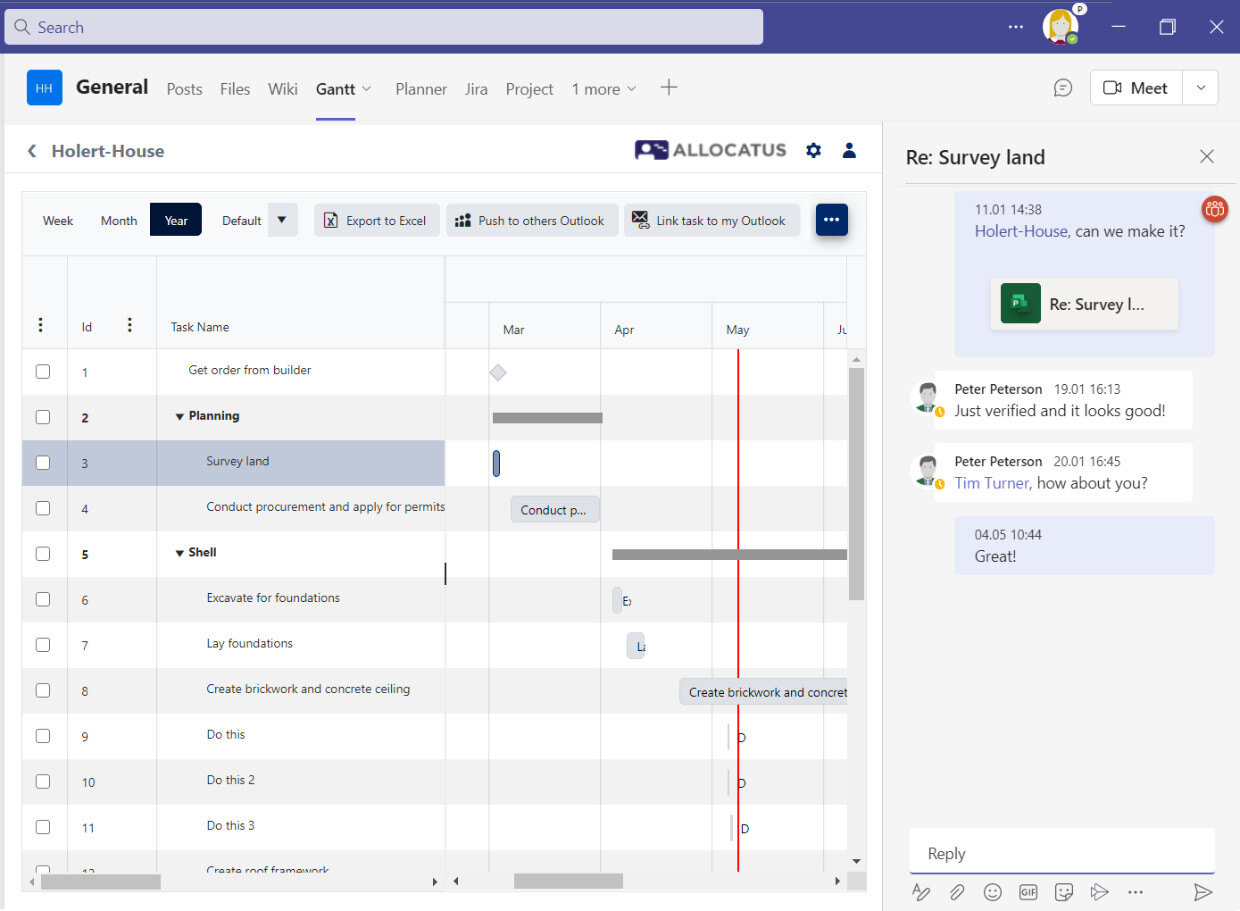
If you are working as a project manager with the Microsoft Project Desktop App (MS Project) and your team is using Microsoft Planner it can be tedious to keep the data in sync. With Holert Project2Planner you can integrate both Apps.
Key facts at a glance
- Project2Planner sends selected tasks from the Microsoft Project Desktop App into a Microsoft Planner plan – and reports progress back into the project schedule.
- A basic plan in Microsoft Planner is sufficient; Planner is part of the Microsoft 365 and Office 365 suites. Project Online is not required.
- Timeline (Gantt) view, dependencies, milestones and critical path stay in Microsoft Project; in Planner they require a premium plan.
- For teams losing Project Online on 30 September 2026, scheduling stays in Project desktop or Microsoft Project Server SE – sharing happens through Planner.
- Holert sets up Project2Planner and Allocatus at a fixed price as part of the Smart Start package.
Challenges when working without any integration between MS Project and Planner
If you are a project manager working with the Microsoft Project Desktop App (MS Project) and you are not using an extension such as Allocatus, it is
- troublesome to share only the relevant tasks with each team member,
- tracking progress is time-consuming and error-prone,
- Difficult to bundle communication on a task in one place,
- annoying when mistakes happen because checklists are not used.
Integrate Microsoft Project with Microsoft Planner with Project2Planner
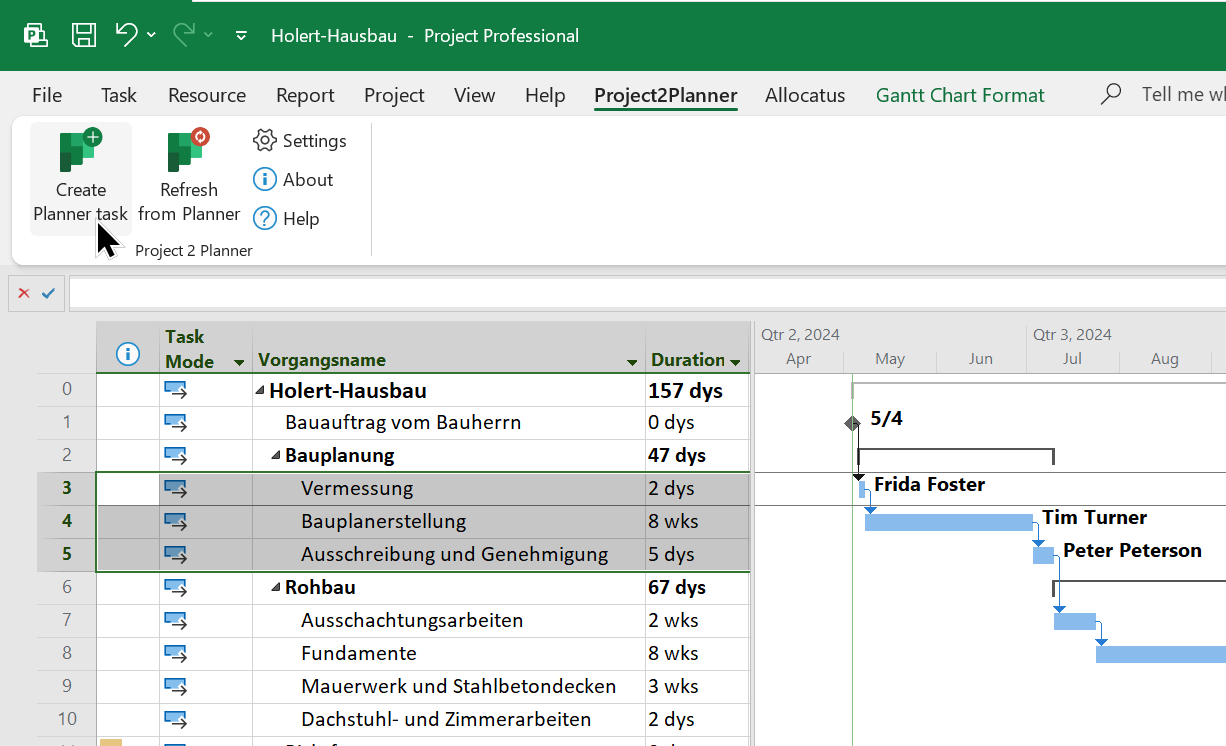
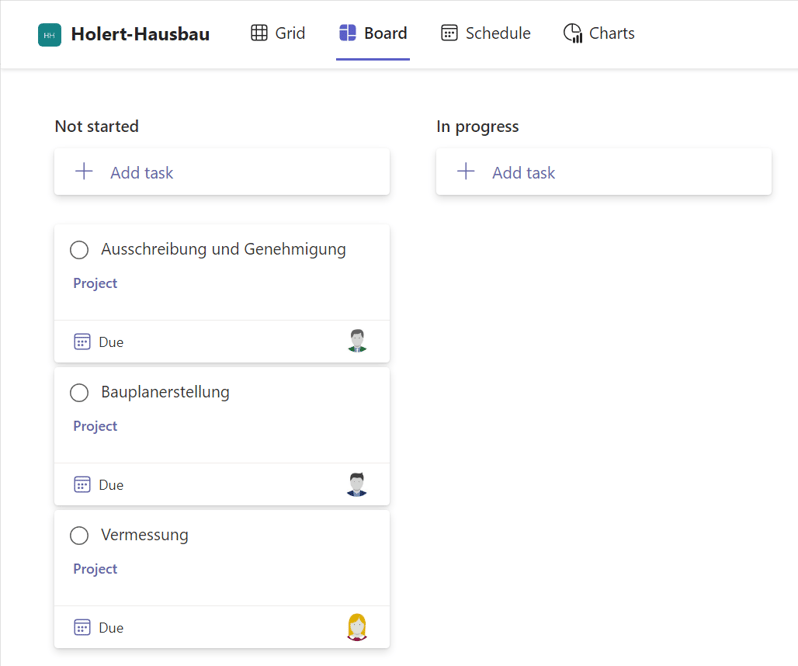
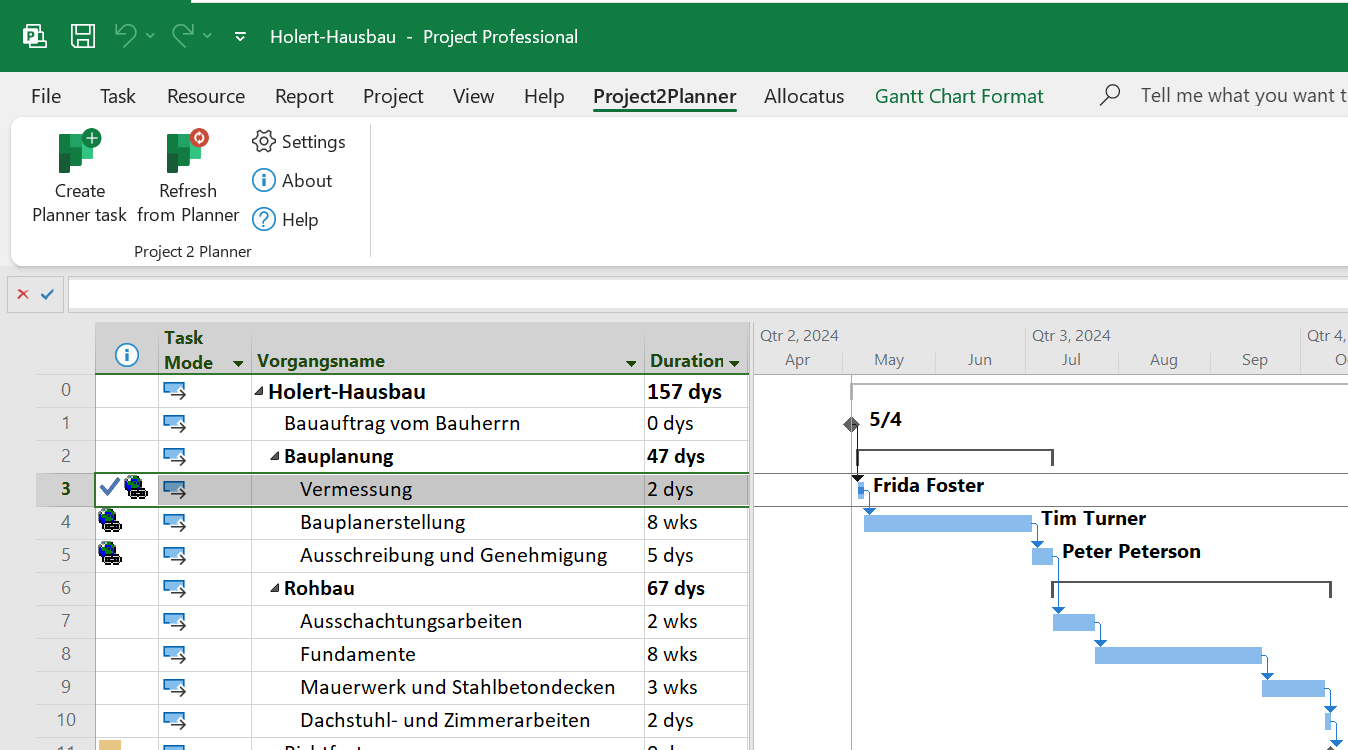
However, if your company uses Microsoft 365 including Microsoft Planner Basic, which is included at no extra cost, you can use the Project2Planner add-in from Holert to create tasks from MS Project directly in Microsoft Planner Basic.
After that it synchronizes your Microsoft Project Gantt Chart directly with your team's Microsoft Planner plan. To do this, simply select the tasks in Project and click the button.
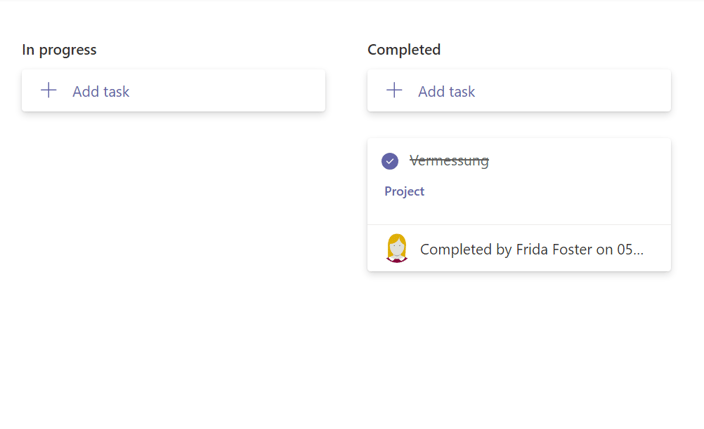
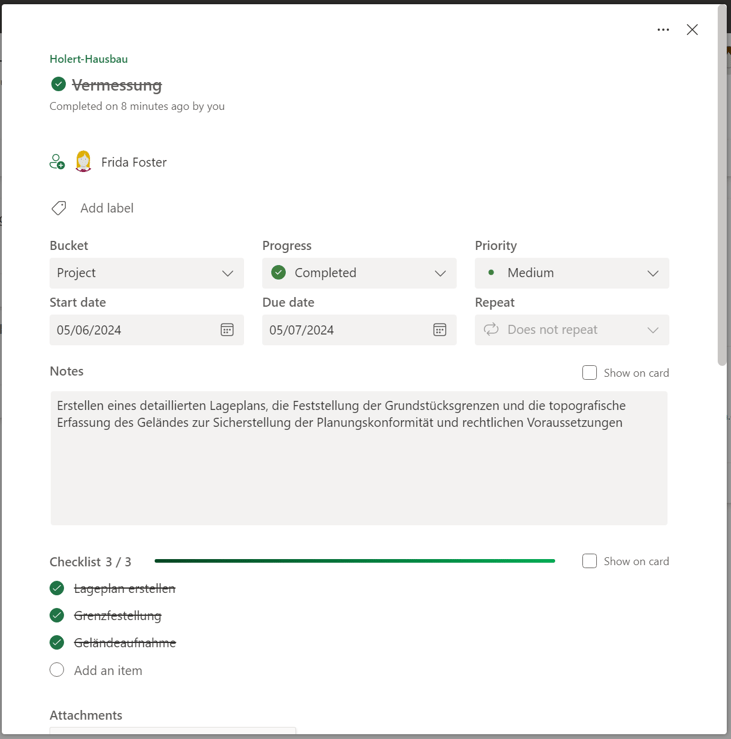
When a team member reports a task as completed,
and you approve the update it will automatically show the progress in your Microsoft Project schedule
and the project manager can view the full details of the task with a click of the mouse.
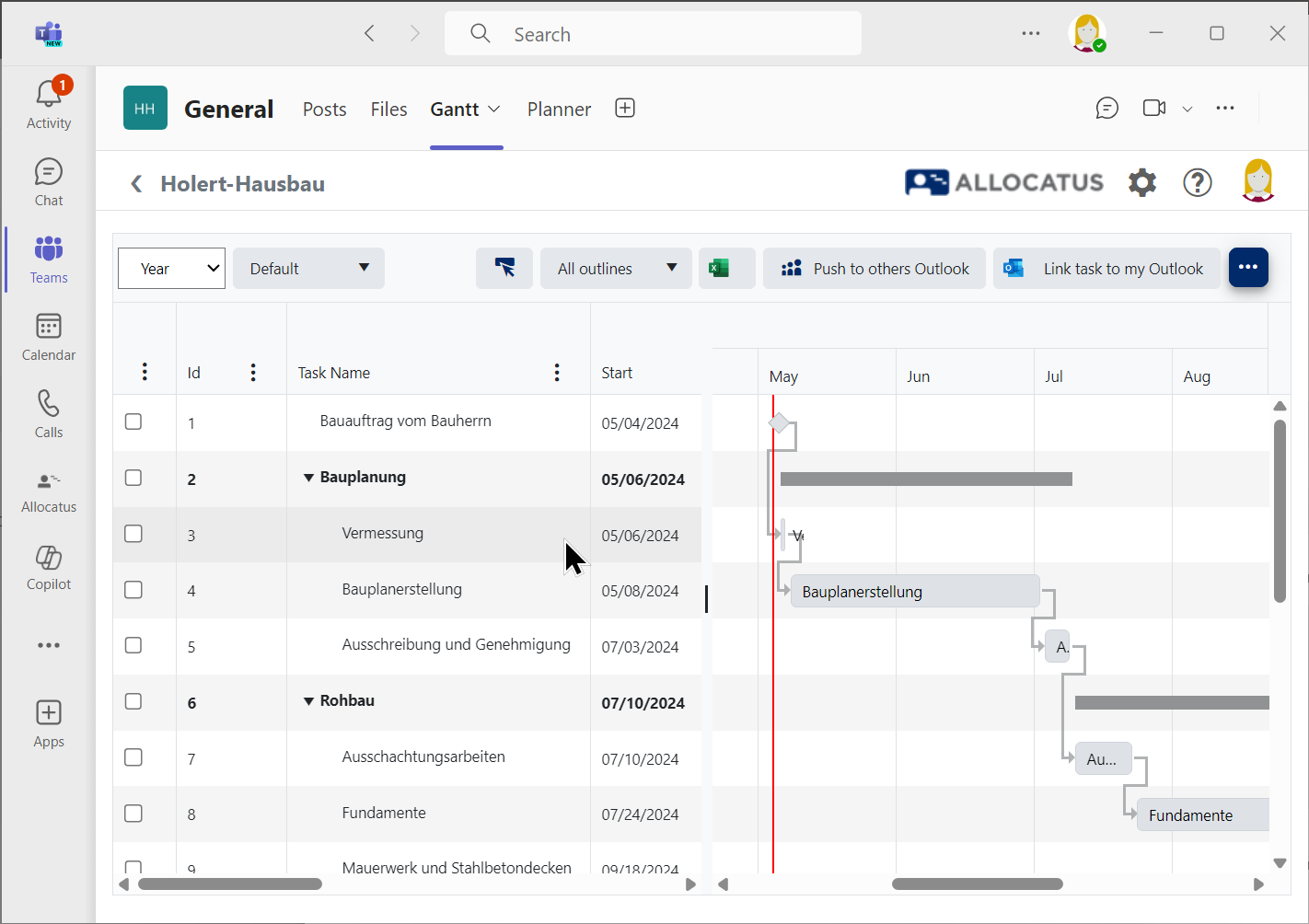
Allocatus (available as an additional add-on: https://allocatus.holert.com) can optionally automatically create suitable project rooms in Teams including Gantt, or provides a Gantt chart in your existing Teams provisioning solution. Project Online is not required.
Benefits of integrating Microsoft Project Desktop App with Microsoft Planner
With Project2Planner from Holert
- Easily share the latest status of your planning - even on mobile via the Microsoft Planner app or Microsoft Teams app
- Always see the progress clearly in Project
- Benefit from the comment function in Planner
- Avoid mistakes by using checklists
- Implement your projects faster with happy employees
Basic plan with Project2Planner or Planner Premium: which route fits?
Both routes bring tasks from Microsoft Project to the team, but they differ in licensing and functionality. The deciding question is where the schedule is maintained: if it stays in the Project Desktop App, a basic plan is enough; if scheduling itself should move into Microsoft 365, the route leads to Microsoft Planner Premium Plans. Microsoft documents the feature differences between both plan types in its comparison of basic and premium plans.
| Criterion |
Basic plan with Project2Planner |
Premium plan |
| Licence |
Included in the Microsoft 365 and Office 365 suites, plus Project2Planner |
Planner Plan 1 or Planner and Project Plan 3/5 |
| Where the schedule lives |
Microsoft Project Desktop App or Project Server SE |
Planner itself (data in Dataverse) |
| Timeline (Gantt) view in Planner |
No (Gantt in Project, optionally via Allocatus in the Teams channel) |
Yes |
| Dependencies, milestones, critical path |
In Microsoft Project |
Included in Planner |
| Task limit per plan |
9,000 |
3,000 |
| Tasks in the Outlook calendar and in the Tasks app on Teams Mobile |
Yes |
No |
| Progress flows back into the project schedule |
Yes, after the project manager approves it |
Not applicable, the plan lives in Planner |
How the team works with those tasks day to day is covered in Microsoft Planner (Tasks in Microsoft Teams); the wider picture is set out in Project Management with Microsoft Teams.
What the end of Project Online on 30 September 2026 means for you
Microsoft is retiring Project Online on 30 September 2026; Project desktop, Project Server and Planner are not affected. If you have been using Project Online to store your schedules and to give the team access, what you mainly need is a new way for plans and tasks to reach the team.
Project2Planner covers exactly that case: scheduling continues in the Project Desktop App or in Microsoft Project Server SE, while sharing runs through a basic plan in Planner from Microsoft 365. Which successor option fits your portfolio, and how the migration works, is covered in Microsoft is discontinuing Project Online – what are the best alternatives?.
Frequently asked questions about integrating Microsoft Project and Microsoft Planner
Do I need Project Online or Project Server for Project2Planner?
No. Project2Planner works with the Microsoft Project Desktop App and a Planner plan from Microsoft 365. A Project Server SE in the background is possible, but not required.
Which Planner licence do team members need?
A basic plan is enough. Planner is part of the Microsoft 365 and Office 365 suites; a Planner premium subscription is only needed for premium features such as the timeline, dependencies or the critical path.
Does progress from Planner flow back into the project schedule?
Yes. When a team member completes a task in Planner, Project2Planner writes the status into the task in Microsoft Project once the project manager approves it.
Can team members see their tasks on mobile devices?
Yes, through the Planner app or the Tasks app in Microsoft Teams and in Microsoft To Do. According to Microsoft, the Tasks app on Teams Mobile is a basic plan feature.
How does Project2Planner differ from Allocatus?
Project2Planner transfers tasks into Planner. Allocatus additionally distributes tasks into Outlook calendars and Microsoft To Do and provides a Gantt chart in the Teams channel.
How Holert supports you in rolling out Project2Planner
Project2Planner reliably solves the technical synchronization between MS Project and Planner – but in practice, the value for the whole PMO often doesn't fail because of the add-in itself. It fails because Teams and Planner structures are inconsistent: without aligned naming conventions, bucket structures, and Teams provisioning, the synchronization stays limited to individual project managers instead of benefiting the whole PMO.
As an implementation partner for Microsoft 365 and Atlassian with over 25 years of experience in project, product, and portfolio management, we help PMOs – including at customers such as KUKA, Rohde & Schwarz and Amer Sports – set up Microsoft 365 tools like Project, Planner, and Teams consistently. As part of our Smart Start package, we configure Project2Planner and Allocatus at a fixed price to match your rollout and governance model. You can find further project examples in our customer references.
Would you like to see Project2Planner in action? Contact us for a free demo.
 Renke Holert
 Renke Holert : Nov 29, 2025, 8:33:18 AM